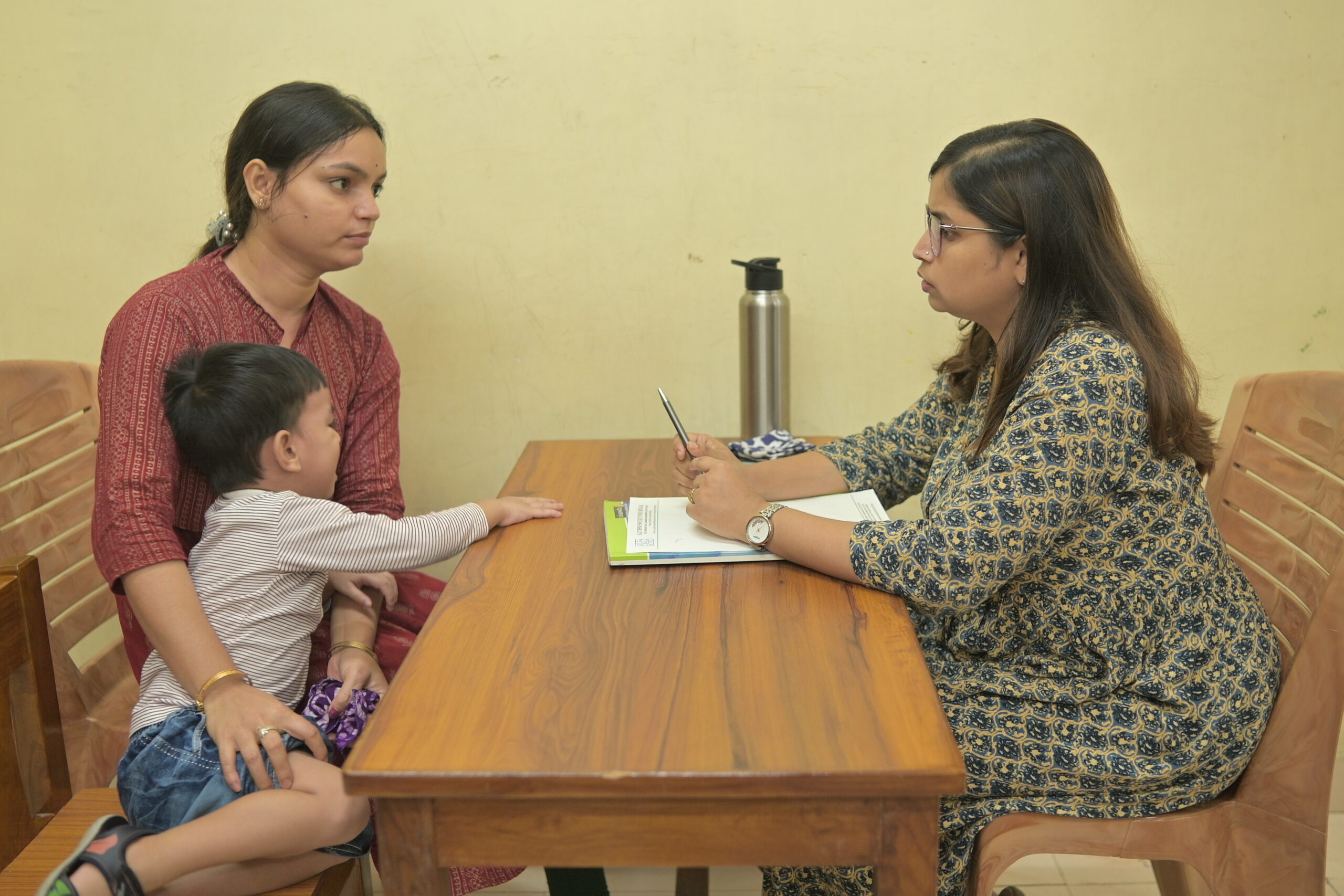
How is the child screened?
Most screening tools involve questions for parents regarding the child’s developmental history and present state. It can also involve observation of the child’s play, communication and social responses.
How is the child diagnosed?
As mentioned earlier there are no biological markers for the diagnosis of Autism. Therefore diagnosis is done through observation of the child , questioning parents about developmental history of the child. The professional may also ask questions about the child responses and behaviors in different situations. Professionals usually use diagnostic tools to identify Autism.
Screening tools for autism used in India include:
- Modified Checklist for Autism in Toddlers (M-CHAT): This is a widely used toolfor screening autism spectrum disorder in young children. It consists of a series of questions answered by parents or caregivers about the child’s behavior.
- Social Communication Questionnaire (SCQ): The SCQ is another screening toolthat assesses communication skills and social functioning in individualssuspected of having autism. It is available in different versions for different age groups.
- Autism Spectrum Quotient (AQ): The AQ is a self-administered questionnaire designed to measure autistic traits in adults. It assesses various aspects of social skills, attention to detail, and imagination.
- Developmental Behaviour Checklist (DBC): Although not specific to autism, the DBC is often used as a screening tool for various developmental disorders,including autism. It assesses a wide range of behaviors and emotional functioning.
- Indian Scale for Assessment of Autism (ISAA): Developed specifically for use in India, the ISAA is a screening tool designed to assess autism spectrum disorder in children aged 2-9 years. It takes into account cultural and linguistic factors relevant to the Indian context.
- Autism Diagnostic Observation Schedule (ADOS): While not a screening tool perse, the ADOS is a structured observation assessment commonly used in diagnostic evaluations of autism. It provides a standardized way of observing and coding social and communication behaviors.
It’s important to note that these tools are often used as part of a comprehensive assessment process conducted by healthcare professionals, including psychologists, pediatricians, and developmental specialists, to determine whether further evaluation for autism spectrum disorder is warranted.